by Ida Renzicchi

A little chat with Maestro Gianni Quaranta
I meet Maestro Gianni Quaranta, Oscar winner, in his beautiful house in Rome.
Some time ago, intrigued by such an extraordinary career, I asked him to write together his biography with which, rather than focusing attention on the personal events of his life, the Maestro, the undisputed brilliant artist, made me understand that he, above all, wants to convey his boundless passion for Art in all its forms.
Due to commitments on the part of the Maestro, we have been forced to temporarily suspend our meetings which I sincerely hope will be able to resume as soon as possible. In the meantime, I’m happy to have a chat with him.
Gianni Quaranta, famous all over the world, has obviously been interviewed by the most titled journalists. This intimidates me a little and it is with great humility that I ask him some questions.

Q. Maestro, first of all congratulations: your curriculum is impressive! You are one of the most important artists in Italy, you have worked and are known all over the world. But, what is Art for you? How would you define it?
A. Art, in the broad sense of the word, for me, is making and transmitting culture. I would define Art a sort of evolution of man himself, the awareness of creating something useful to humanity for knowledge and the good taste of life, the aesthetic expression of the interior and of the human soul. Art is, and has been, my reason for living.
Q. You are set designer, director, costume designer, designer. You have dealt with cinema, theater, opera, painting, advertising, architecture and have done all at the highest levels, receiving awards and honors of all kinds. What is the ambit that has given you the most satisfaction?
A. I received the greatest satisfaction as a set designer for cinema: it is a sector that gives great visibility while offering immediate feedback on the result of one’s work.
Q. Your works are all of great importance, the films you have made are famous all over the world. Since the beginning of your artistic career you made your debut with titles of global resonance, in practice you, as they say, “made your debut with a bang”. What do you think pushed the insiders to have so much faith in an unknown young artist, just at the beginning of his career?
A. From a very young age, I showed great interest and enthusiasm to my profession, dedicating to it all my time and energy. I have always been an enthusiast of life and a lover of Art in general, in particular of Scenography. I believe my propensity for this discipline was evident since I was a boy. Let’s not forget that, immediately after my studies at the Brera Academy in Milan, I had the opportunity to gain experience with some of greatest Masters, such as Luciano Minguzzi, Luciano Damiani e Renzo Mongiardino, who appreciated my professionalism and my artistic taste.
As they say, the world is so big and so small at the same time, therefore the rumor of “this very talented young man” (cit.) quickly spread. Since then it has been a succession of tasks, which have sometimes overlapped. For my part, I have always faced and completed my activities with great responsibility and genuine enthusiasm.
This is why I believe that study, passion, seriousness and responsibility are always recognized.
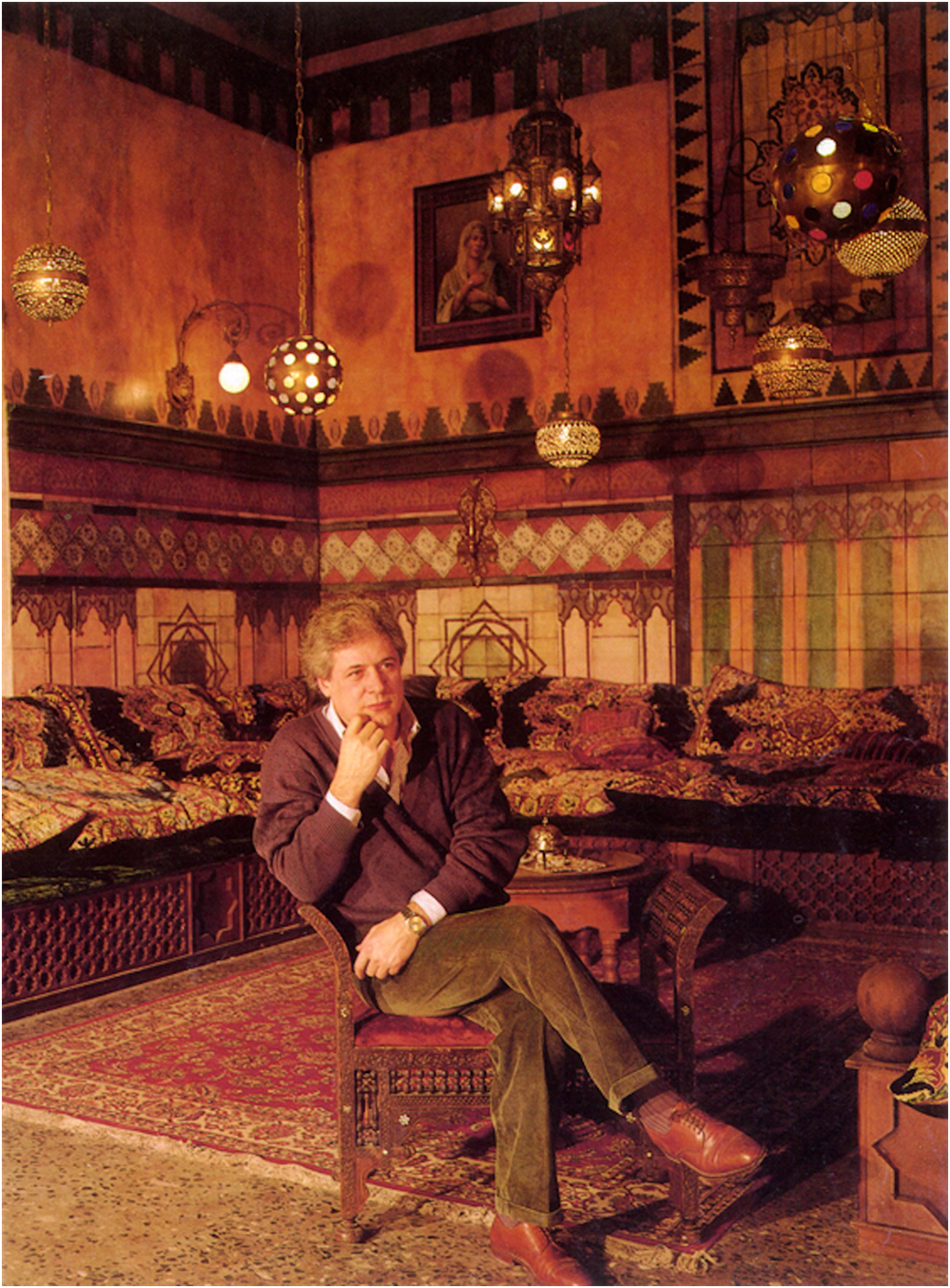
1989 – Gianni Quaranta on the set of the film “The comfort of strangers”, directed by Paul Schrader
Q. I witnessed, as a spectator, the staging of some of your operas and theatrical plays and I was very impressed by the disruptive effect of your scenography at the opening of the curtain and by the genius of your ideas. I remember the great success, the literally delirious audience … Where do you find inspiration? How do you surprise the audience in this way while remaining faithful to the classical canons of the Opera?
A. I find great inspiration in painting, especially in that of the great artists of the past. A painting, a fresco, a drawing, above all creates an atmosphere. And the “atmospheres” are precisely what I intend to render with my work, also through the use of lights and colors.
My goal is not so much to amaze the viewer, even if amazement is an element that is recognized to me, my aim is to try to propose the vision of an environment or of a context considering a completely new angle of observation compared to the usual.
To do this, it is obviously necessary to have a strong sense of creativity, while respecting the classicism, as I love to do.
In short, I try to arouse the interest of the beholder, and I am the very first spectator of that work at the very moment in which I create it.
Q. When the great director James Ivory, at the Connelly Theater in New York, saw the scenography you created for Brandon Cole’s “Imperfect Love”, he literally said: “This is professional” “This is Gianni!” “This is Italian also” highlighting with these three phrases the uniqueness of your work and your person (he didn’t even need to mention your surname …). How do you make your sets so unique and exclusive?
A. As said before, the singularity and exclusivity, if we can say so, of my sets always derives from the point of view from which they are observed. Furthermore, it is essential to give a rhythm to the sequence of the scene changes, making the most of the technical potential that the specific theater possesses.
For example, in “Aida” I created at the Metropolitan Theater in New York, in the second act, from a central vision of Amneris’ room, I proposed a transversal vision of the environment created for the Triumphal March on the Ethiopians, through a change of scene with a strong emotional and visual impact.
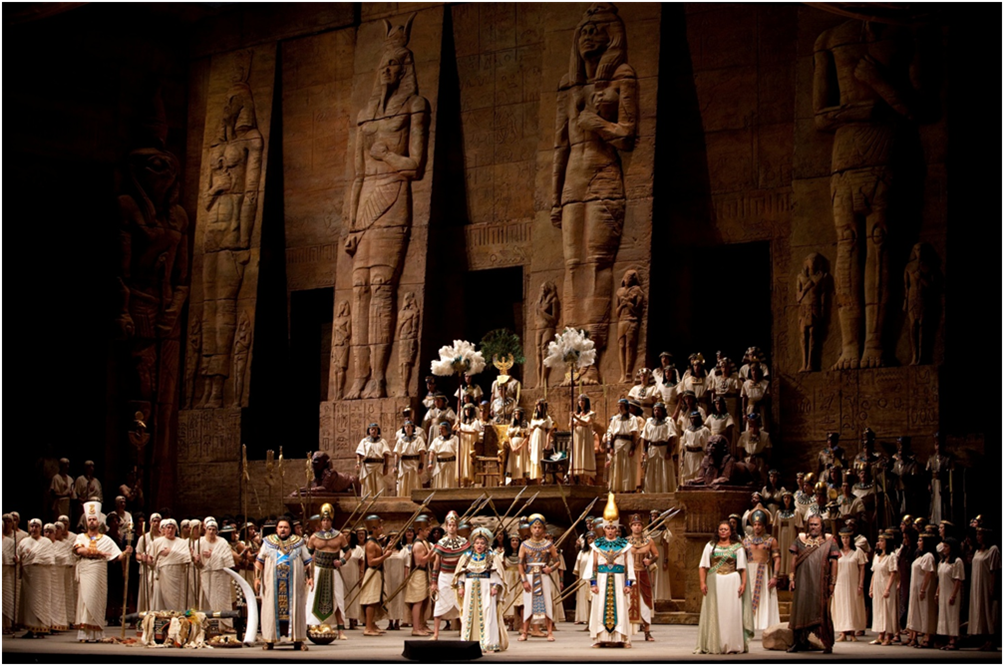
1988 – Opera “Aida” – Metropolitan Opera House Theater in New York, directed by Sonja Frisell
The MET has five stages, four of which are mobile, so I prepared Amneris’s room on the stage below, bringing it up to the main one. Subsequently, at the right moment, with a change at sight (because the music has no interruptions), I made the stage with the room go underground to discover the following scene of the March, already positioned. The audience, literally into ecstasy, continued to applaud. I, on the other hand, incurred the conductor’s ire because the applause muffled the notes of the music.
Q. You are a perfectionist. How important is it to be like this?
A. Being a perfectionist comes from loving your work, therefore, it means giving your best. If you want to get to the top, you must always be close to perfection, so it is very important to be this way.
Q. Is there still something in your artistic career you have not done and you would like to do?
A. Surely. The thing I would like to do is to direct a film that tells the fascinating world of Opera, of “Bel Canto”, an unknown world for most of the people. I have many anecdotes to tell, also relating to my own experience.
Q. If you could go back, is there something you would not do again?
A. No, no, for Heaven’s sake, I’d do again everything I’ve done.
Q. Who has been the most important person or the most important people in your life and why?
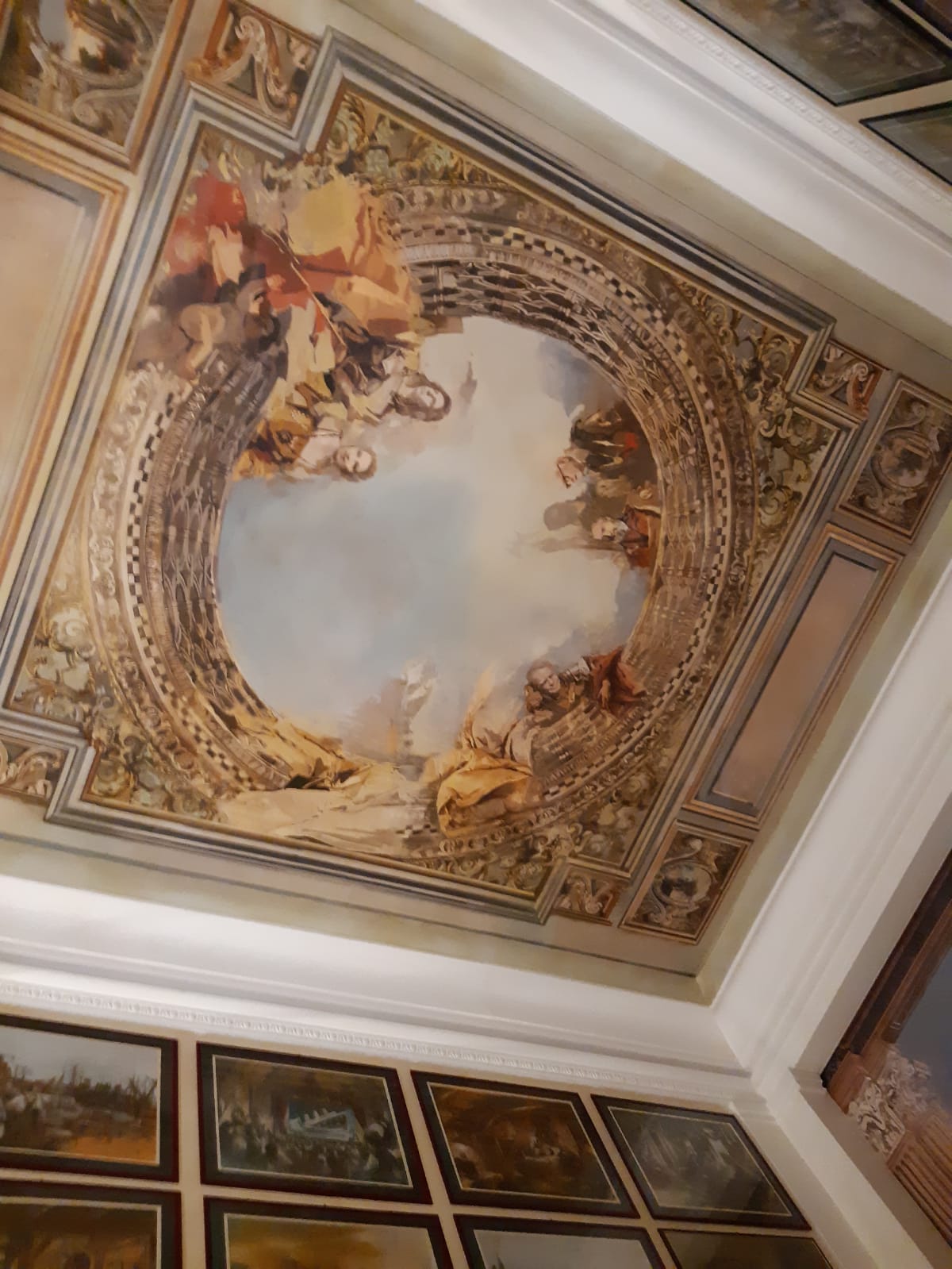
A. I have met and have worked with many people but three have been those I regard as the most important of my professional life: the architect Renzo Mongiardino, whom I consider my Maestro because it was he who taught me the set designing profession, the director Franco Zeffirelli who gave me the opportunity to implement everything I had learned by calling me to work in his productions, from cinema, theater and opera for seventeen years and the director James Ivory with whom I had a profitable collaboration in the making of the film “A Room with a View” for which I won the Oscar for the scenography created by me. (The Maestro points out to me that, on the large painting, inspired by the famous oculus of the “Camera degli Sposi”, frescoed by Mantegna, in Mantova, which covers the entire high ceiling of his house hall, in addition to his dearest people, his wife and his daughter, he also wanted to pay homage to the three most important figures of his artistic career).
Q. Among your works, all important, which is the one you care most about? Let’s say, the favorite son? Why?
A. Without doubt the film “Farinelli-Voce regina”. Set in the 1700s and built around the story of the well-known castrato Farinelli, it is a film in which I had the opportunity to express myself both as a cinematographic and theatrical set designer as the film narrative also included the staging of five theatrical performances, which I had to create with the same technique used at the time.

1995 – Film “Farinelli-Voce regina”, directed by Gérard Corbiau
Q. We have learned that you have also recently received several awards and honors… what can you tell us about it?
A. Receiving prizes is always very rewarding, not so much for the prize as an end in itself, but as this honor summarizes the appreciation for the artistic activity carried out by those who receive it and is, at the same time, a spur for the future.
Q. How do you feel when you receive an award? What do you think? To whom do you dedicate it?
A. When you receive an award, you feel you have done a good job, appreciated and recognized by most of the people who have benefited from it. First of all, I dedicate it to myself for the diligence I put into carrying out my profession, but also to the people who are closest to me: to my wife Giuliana, who supports me so much by sharing with me the anxieties and moods during the preparation, and who bears me accepting my moods, sometimes joyful, but also restless when I struggle to find the key to the work to be done.
Q. You are considered the artistic heir of Zeffirelli with whom you have worked in important films such as “Brother Sun Sister Moon”, Jesus of Nazareth “and” La Traviata”, for which you also received an Oscar nomination. How was your relationship with the deceased director?
A. Working with him was easy as, before making his debut as a director, Zeffirelli was also a very good set designer. We understood each other immediately because I love the classical world he was able to represent very well. Let’s not forget that, among his best films, he made “The Taming of the Shrew” with Elisabeth Taylor and Richard Burton and “Juliet and Romeo” with Olivia Hussey and Leonardo Whiting.
When, in 2011, the first season of the grandiose theater of the Royal Opera House in Muscat, Oman, strongly desired by the Sultan, His Highness Qabus bin Said Al Said, was inaugurated, both Franco Zeffirelli and I were called.
Franco staged the opening opera, “Turandot”, and I the closing opera, “Carmen”, of which I signed the direction, the set design and the costumes.
It seemed to me just as if they wanted to highlight this artistic legacy. The passing of the baton, from master to pupil, had already taken place some time ago. I had embarked on my career for years now, but that was an exciting experience.
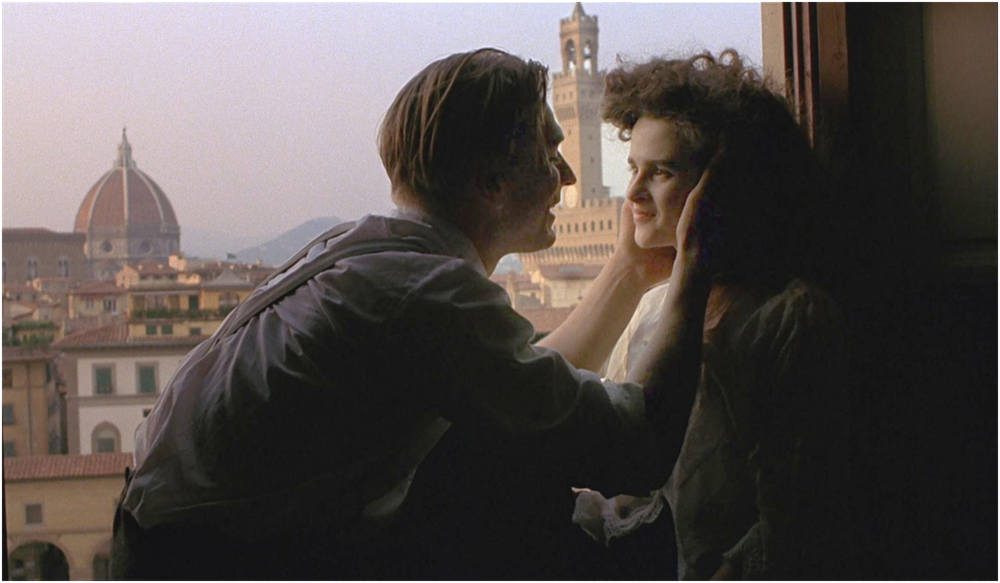
1985 – Film “A Room with a View“, directed by James Ivory
Q. What does it mean to have three nominations and receive an Oscar? What were your emotions?
A. Having nominations for the American Oscars is always a great satisfaction, it means, as mentioned before, being gratified that your work is appreciated and recognized worldwide. You have the confirmation you have taken the right path in the realization of your ideas.
I also believe that winning the Oscar prize represents the strongest emotion in an artist’s professional career. Receiving it is simply an indelible experience.
Q. How did this prestigious award change your artistic career?
A. An Oscar does not change the artistic career much, but this circumstance instills awareness of the things you are doing and security for your future works.
Q. How do you judge the world of cinema and theater on the basis of your experience?
A. Since through cinema and theatre culture is disseminated, I believe that working in both areas is, at the same time, a privilege but also a huge responsibility.
One thing I do not like, and that often occurs, especially in the theatrical field and particularly in the opera, is the alteration, as an end in itself, of the settings and costumes, which have nothing to do with the context in which the work was born, thus misleading the viewer without this having a reason other than the pleasure of simply doing “something else”.
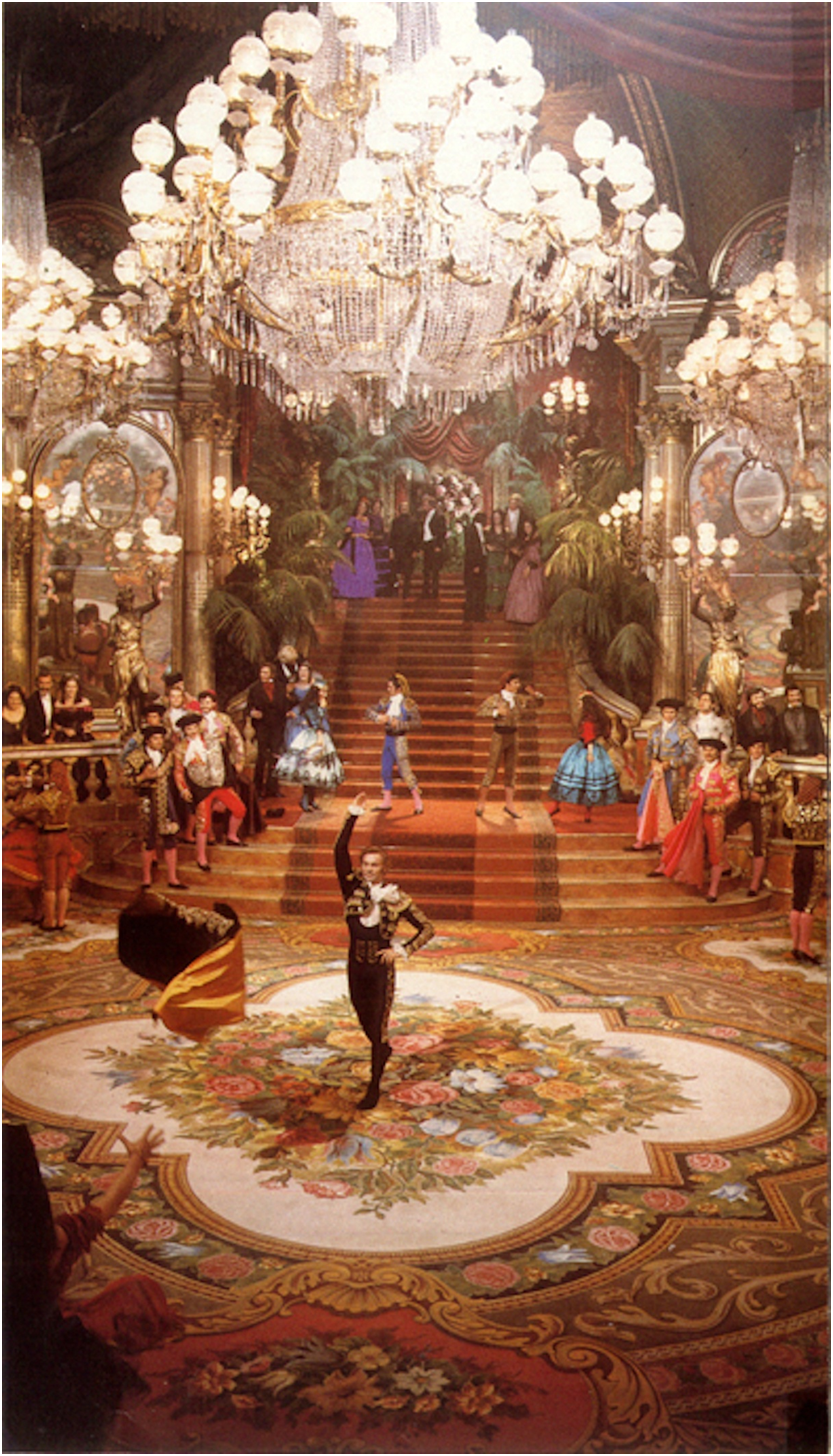
1982 – Film “La Traviata” – Flora’s Salon, directed by Franco Zeffirelli
1983 – Academy Award. Nomination Best scenography for the film “La traviata”
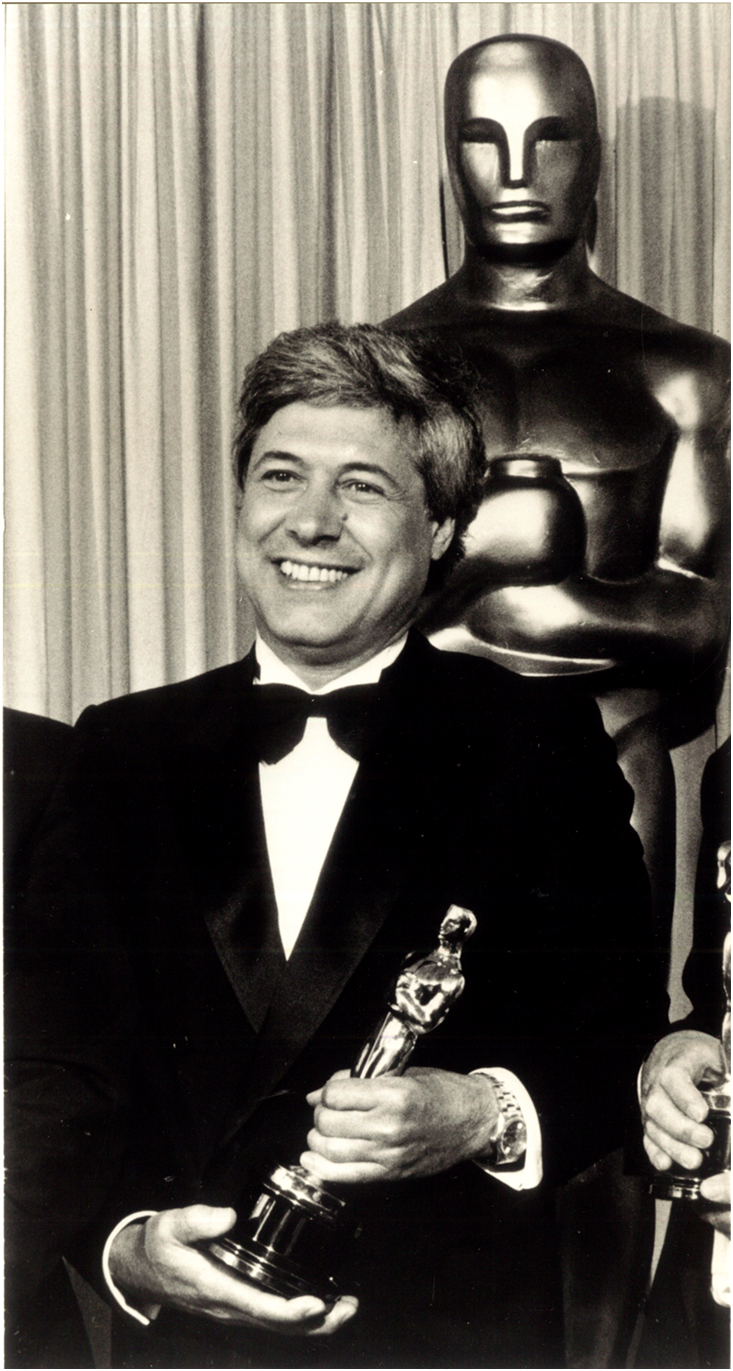
1987 – Gianni Quaranta – Oscar night in Los Angeles. Oscar for the scenography of the film “A Room with a View”, directed by James Ivory
Q. You have been the director, set designer and costume designer, as well as the producer, of “Carmen” by Bizet for the Royal Opera House in Muscat in Oman which opened the doors of the Arab world to the culture of Opera. How to take advantage of these new horizons that are opening up?
A. Italy exports three important things to the world: fashion, cuisine and opera. The Italian language is spoken in all the theaters around the world. When the Sultan of Oman, a cultured and refined man, a lover of music, decided to build the first theater for opera, ballet and so on in the Arab world, he offered his people the opportunity to appreciate the Western culture of the musical world. Today, other theaters have been built in various Arab countries. This circumstance represents not only a further job chance, but above all a great opportunity for cultural exchange.
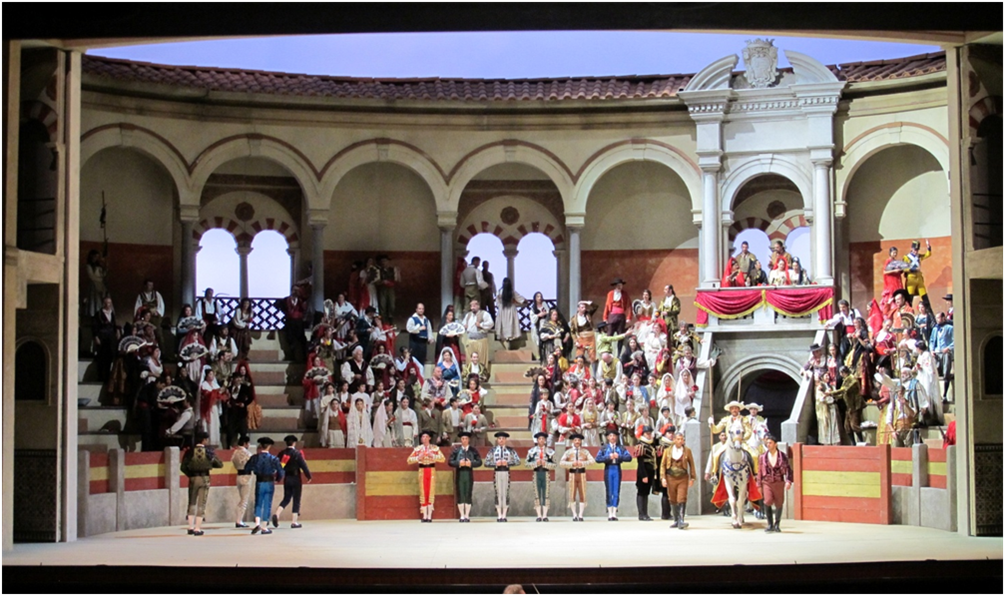
2011 – Opera “Carmen” – Royal Opera House Muscat (Oman), directed by Gianni Quaranta
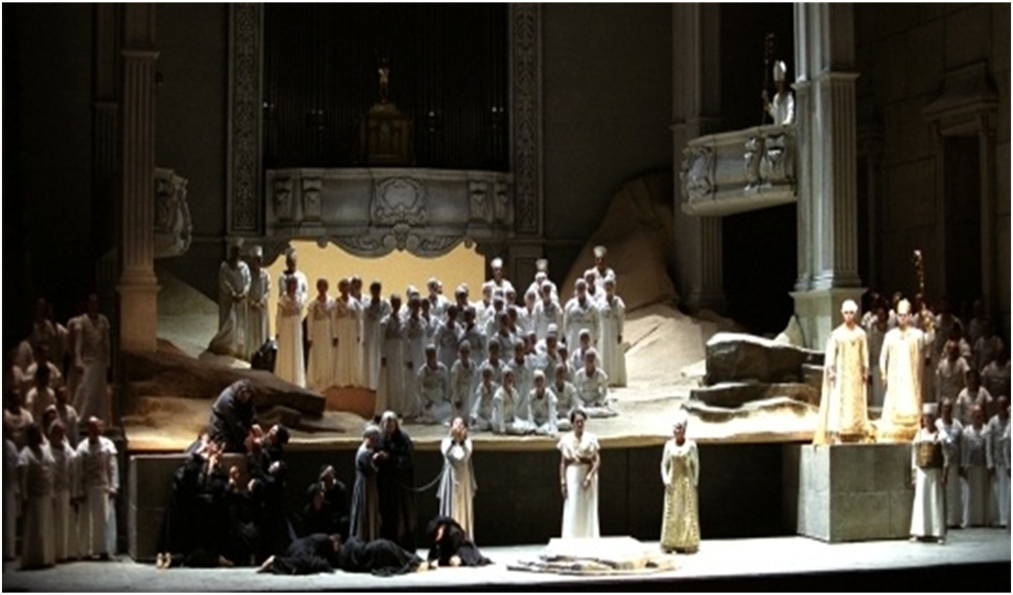
2003 – Opera “Moïse et Pharaon” – Teatro Alla Scala in Milan, directed by Luca Ronconi
Q. What did you think the first time you saw your first professional work as a spectator?
A.”I succeeded in it”, this is what I thought hearing the applause to my first work at the Teatro Alla Scala in Milan.
I had designed sets and costumes for the ballet “La leggenda della Peri” with the dancers Carla Fracci and James Urbain as performers. It was a great success also because I was able to give three-dimensionality and depth to the scenography, which instead in ballet is usually formed only by painted backdrops and wings.
Q. We know you still have many projects. What are you doing in this period? Your ideas for the future?
A. Apart from the pandemia that has hit us and that has slowed down all the projects in progress, I am reading some scripts I have received for some films I hope will start soon.
Q. A young artist asks you for advice on how to approach the artistic world? What do you answer her?
A. I reply that Art is learned by doing it, so doing is important.
I thank the Master for his generous availability and I wish him a happy and prosperous future.
Ida Renzicchi
Rome, September 18, 2021
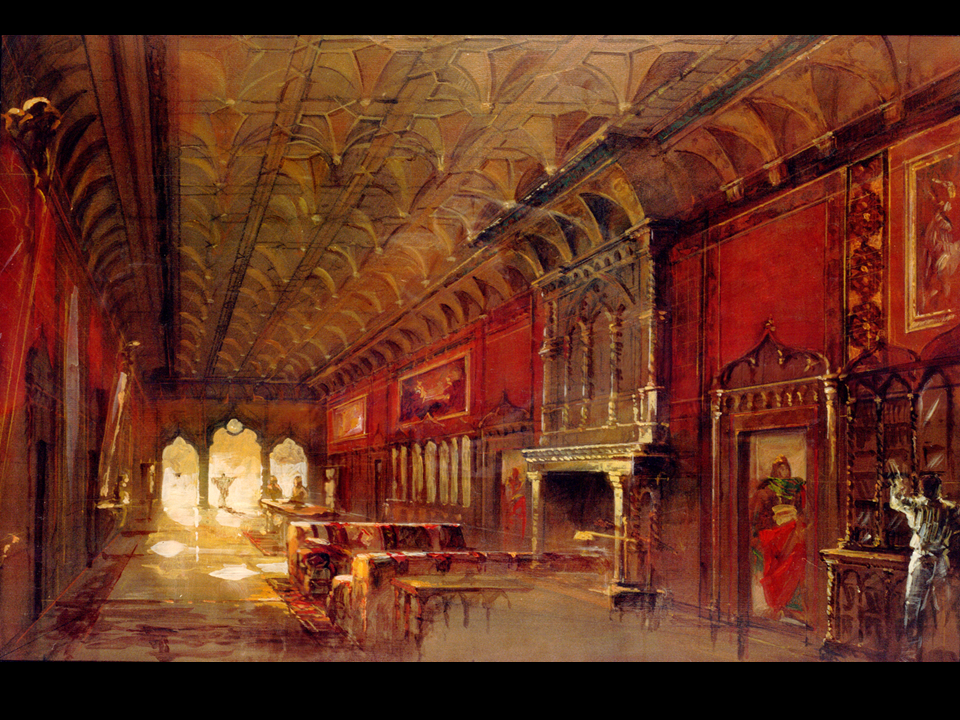
1989 – Sketch for the film “The comfort of strangers”, directed by Paul Schrader
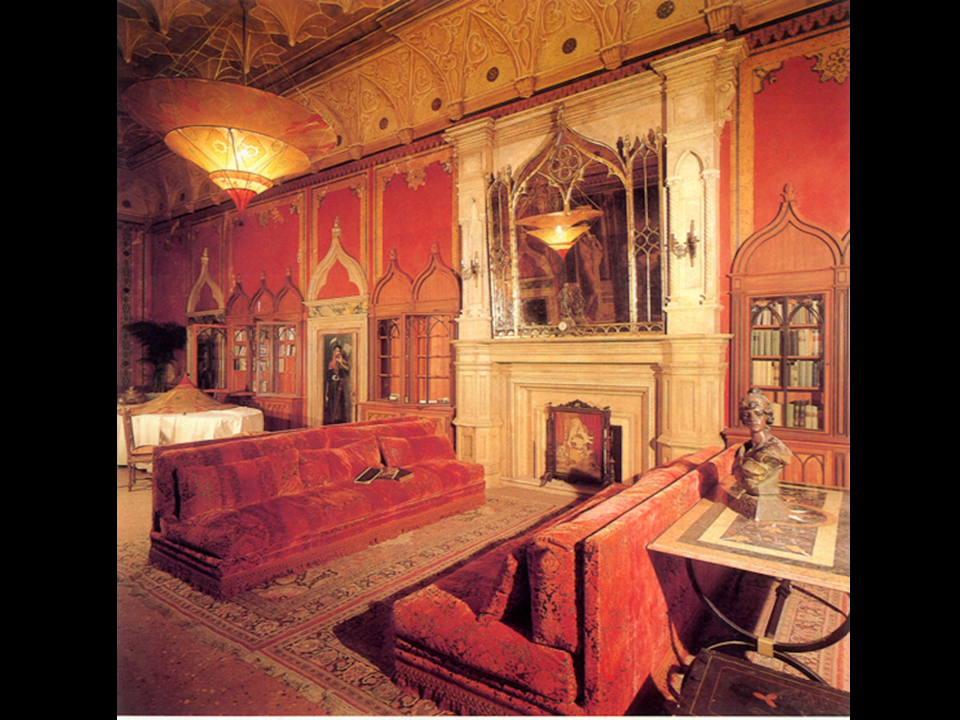
1989 – Film “The comfort of strangers”, directed by Paul Schrader
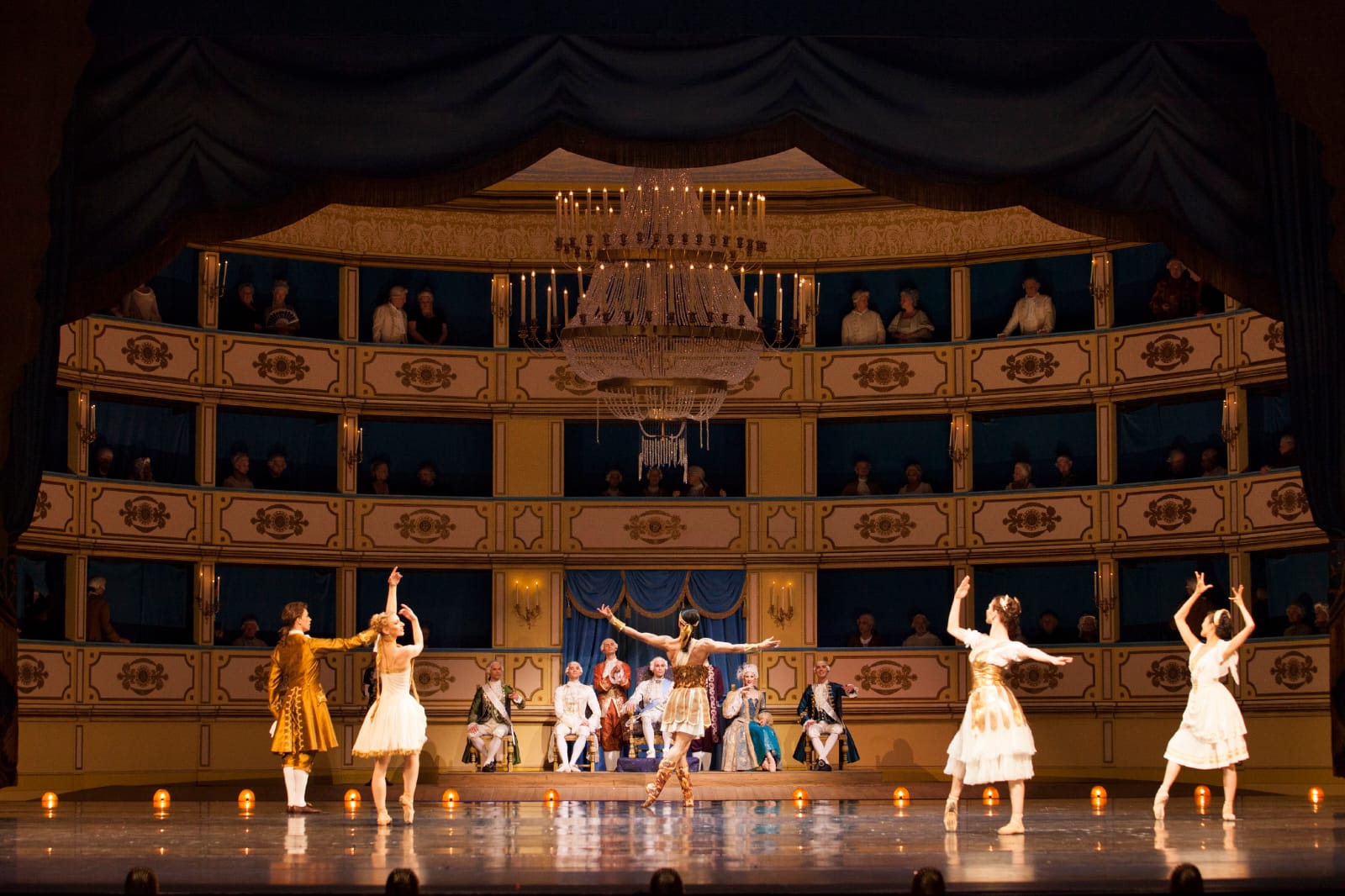
Ballet “Casanova in Warsaw”. Theatre Wielki Opera Narodowa -Warsaw 2015 (Sets & Costumes Designer Gianni Quaranta –
Interview from Facebook https://fb.watch/dHW2N849-J/
“Wonderful decorations for the scenographies painted on canvas, black and white costumes, silks, wigs and taffeta for the period clothes, made to measure, according to the fashion of the 1700s.
At “Culture.pl” we take a look behind the scenes of the ballet “Casanova in Warsaw”, in which Gianni Quaranta, Oscar winner for the scenography of “A Room with a View” and César prize for the film “Farinelli-Voce regina” , takes viewers to relive the time of King Stanisław August.
This is what the exceptional Italian artist said in the interview, speaking of his historical reconstruction of the eighteenth-century theatrical scene and of the duel, famous throughout Europe, between the Venetian seducer and Count Branicki.”

