.
LE DIMORE DI LUCREZIA – THE RESIDENCES OF LUCREZIA
.

.
LE DIMORE DI LUCREZIA – THE RESIDENCES OF LUCREZIA
.
.
by Ida RENZICCHI
.
.
.
La Rocca abbaziale di Subiaco, detta anche “Rocca dei Borgia”, fu costruita verso la fine dell’XI secolo dall’abate Giovanni V con il proposito di instaurare il dominio monastico su Subiaco. Concepita come castello feudale, essa sorse sulla cima di una collina in una posizione dalla quale tenere sotto controllo l’intero castello sublacense, in particolare i ribelli. A scopo difensivo fu munita di fortificazioni, carceri e di una torre di avvistamento oltre ovviamente di stanze, appartamenti e di una piccola chiesa dedicata a San Tommaso. Nel 1349 la costruzione subì danni a causa del terremoto e, saccheggiata e danneggiata anche dai sublacensi, per molti anni non fu abitabile. Nel 1476 fu restaurata dal cardinale Rodrigo Borgia, che la dotò inoltre di una torre quadrangolare munita di merlature, feritoie, carceri e trappole allo scopo di difendere la parte più antica della costruzione. Il Cardinale e la sua famiglia abitarono la Rocca e fu in questo luogo che, secondo alcuni storici, nacquero, nel 1475, Cesare, nel 1476, Giovanni e, nel 1480, Lucrezia Borgia, figli di Rodrigo e della sua amante Vannozza Caetani. Dopo il Borgia, la Commenda passò al cardinale Giovanni Colonna e ad altri membri del suo casato. Durante il dominio della potente famiglia, a causa dei rapporti difficili con la Santa Sede, Subiaco fu teatro di scontri fra gli eserciti e la Rocca fu in parte demolita dall’esercito pontificio.
.
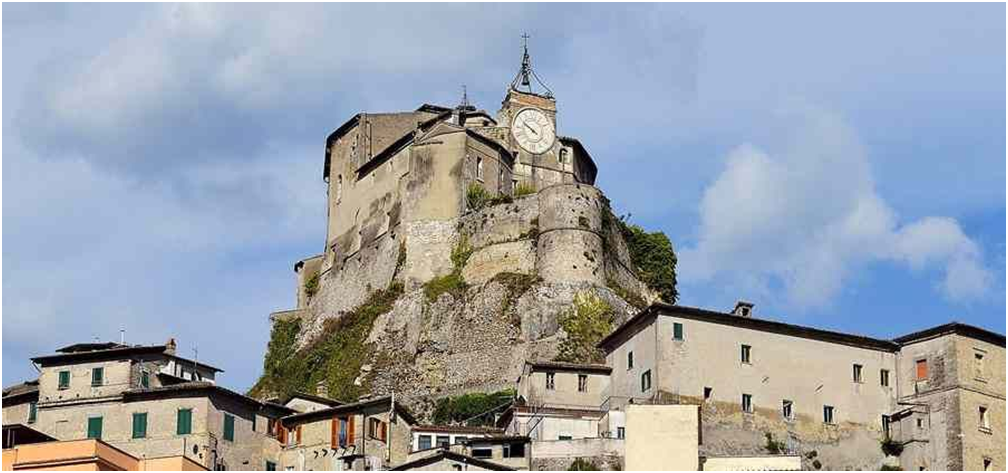
Subiaco (Rome), Italy, Abbey Fortress
.
The Subiaco Abbey Fortress, also known as “Borgia Fortress,” was built toward the end of the 11th century by Abbot John V with the aim of establishing monastic rule over Subiaco. Conceived as a feudal castle, it was built atop a hill in a position from which to monitor the entire Subiaco castle, particularly rebels. For defensive purposes, it was equipped with fortifications, prisons, and a watchtower, as well as rooms, apartments, and a small church dedicated to Saint Thomas. In 1349, the building was damaged by an earthquake and, having been looted and damaged even by the people of Subiaco, it was uninhabitable for many years. In 1476, it was restored by Cardinal Rodrigo Borgia, who also added a square tower with battlements, arrow slits, dungeons, and traps to defend the oldest part of the building. The Cardinal and his family lived in the fortress, and it was here, according to some historians, that Cesare Borgia was born in 1475, Giovanni in 1476, and Lucrezia Borgia in 1480, children of Rodrigo and his lover Vannozza Caetani. After the Borgias, the Commenda passed to Cardinal Giovanni Colonna and other members of his family. During the reign of the powerful family, due to difficult relations with the Holy See, Subiaco was the scene of clashes between armies, and the fortress was partially demolished by the papal army.