.
LE DIMORE DI LUCREZIA – THE RESIDENCES OF LUCREZIA
.

.
LE DIMORE DI LUCREZIA – THE RESIDENCES OF LUCREZIA
.
.
by Ida RENZICCHI
.
.
.
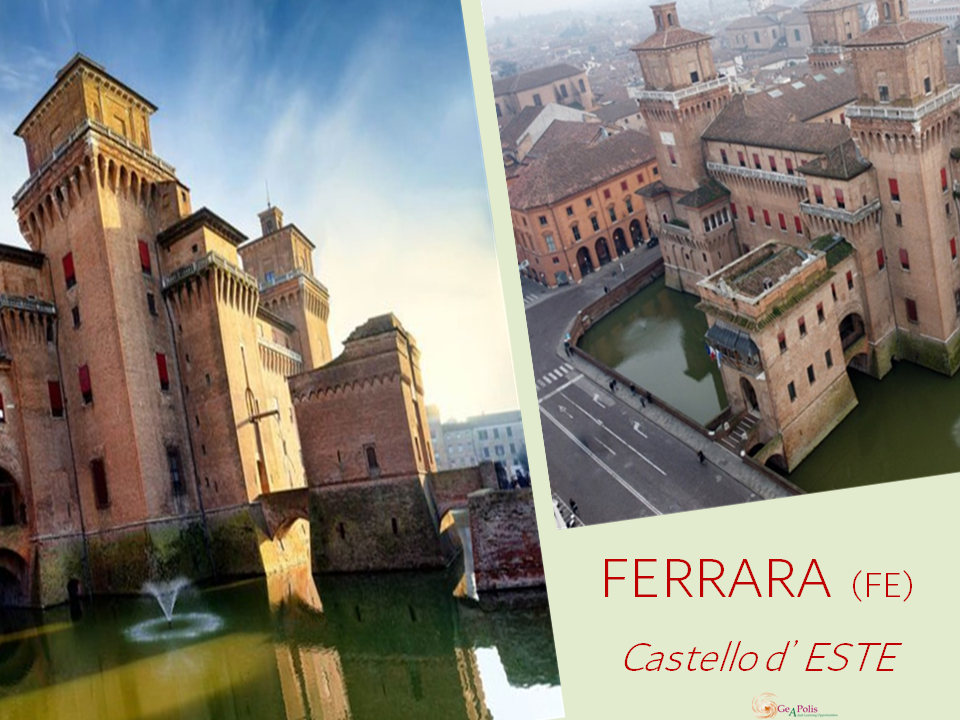
Una pericolosa rivolta scoppiata a Ferrara nel 1385, fece sì che Niccolò II d’Este si convincesse e prendesse atto della necessità di erigere una poderosa difesa per sé e la sua famiglia. Fu per questa ragione e a tale scopo che venne costruito il Castello di San Michele, fortezza che ricorda il Castello di S. Giorgio a Mantova – realizzato anch’esso da Bartolino da Novara. Risalgono a quel periodo la massiccia imponenza del complesso, il fossato, i ponti levatoi, le torri austere. Un passaggio coperto, ancora esistente, univa l’edificio militare al palazzo dei marchesi, oggi Palazzo Municipale.
Nei secoli successivi, cessato il pericolo di sommosse, il castello venne abbellito e architettonicamente slanciato. Allo scopo di farne la magnifica residenza della corte estense, la fortezza venne quindi arricchita con le altane sopra le torri, i balconi di marmo, il cortile d’onore di linee cinquecentesche ed i fastosi appartamenti affrescati.
Le imponenti torri, poste ai quattro angoli del Castello svettano ancora oggi sulla città, simbolo indelebile della grandezza e magnificenza della Famiglia D’Este: a sud-est la Torre Marchesana e a sud-ovest la Torre di San Paolo, a nord-ovest la Torre di Santa Caterina, a nord-est la splendida Torre dei Leoni, punto panoramico da cui è possibile ammirare la città.
Il castello Estense fu dimora di Lucrezia Borgia e di Alfonso d’Este. Gli sposi, dopo le nozze, si stabilirono a Castel Vecchio, mentre il duca Ercole mantenne la sua residenza nel Palazzo Ducale, l’attuale Palazzo Municipale.
Nel castello di Ferrara, prima luogo austero e solenne, Lucrezia Borgia, abituata alla ricchezza e ai fasti romani, portò l’Arte e la Cultura del Rinascimento Italiano ospitando i più grandi artisti e letterati dell’epoca. L’illustre nobildonna, amatissima dai suoi sudditi, si circondò di bellezza e manifestò la vita sontuosa che conduceva quale Duchessa d’Este con l’ostentazione di pezzi d’oro e d’argento, arazzi delle Fiandre, sete e pietre preziose che ricoprivano sia ogni suo di capo di vestiario che qualsiasi oggetto di sua appartenenza. Durante la guerra, Lucrezia Borgia non esitò però ad impegnare la sua argenteria ed i suoi favolosi gioielli per ottenere un prestito allo scopo di alleviare le ristrettezze dei suoi sudditi. Tale nobile gesto suscitò ancora di più la venerazione che già i ferraresi nutrivano nei confronti della loro Signora da tutti ormai appellata “madre del popolo”.
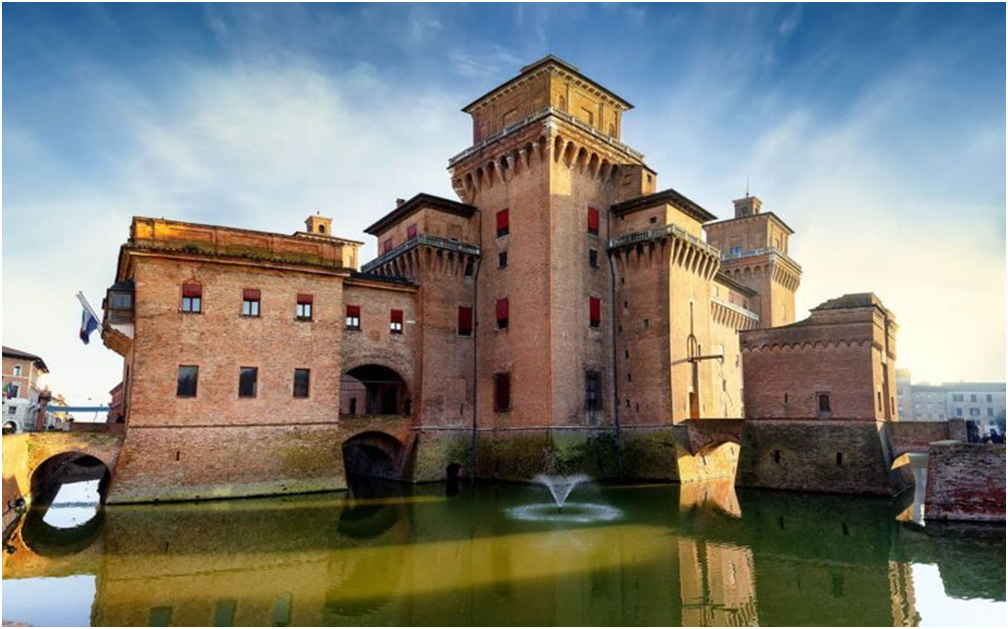
Ferrara, Italia, Castello d’Este
.
A dangerous revolt that broke out in Ferrara in 1385 convinced Nicholas II of Este of the need to build a powerful defense for himself and his family. It was for this reason and for this purpose that the Castle of San Michele was built – a fortress reminiscent of the Castle of San Giorgio in Mantua, also designed by Bartolino da Novara. The massive grandeur of the complex, the moat, the drawbridges, and the austere towers date back to that period. A covered passageway, still standing, connected the military building to the marquises’ palace, now the Town Hall.
In the following centuries, once the threat of uprisings had passed, the castle was embellished and architecturally enhanced. To make it the magnificent residence of the Este court, the fortress was enriched with covered terraces atop the towers, marble balconies, a 16th-century courtyard of honor, and sumptuous frescoed apartments.
The imposing towers at the four corners of the castle still stand tall over the city, an enduring symbol of the grandeur and magnificence of the Este family: to the southeast, the Marchesana Tower, and to the southwest, the Saint Paul’s Tower; to the northwest, the Saint Catherine’s Tower; and to the northeast, the splendid Lions’ Tower, a panoramic point from which one can admire the city.
The Este castle was the home of Lucrezia Borgia and Alfonso, Duke of Este. After their wedding, the newlyweds settled in Castel Vecchio, while Duke Ercole maintained his residence in the Palazzo Ducale, now the Town Hall.
To Ferrara’s castle, once an austere and solemn place, Lucrezia Borgia, accustomed to Roman wealth and pomp, brought the art and culture of the Italian Renaissance, hosting the greatest artists and writers of the time. The illustrious noblewoman, beloved by her subjects, surrounded herself with beauty and demonstrated the lavish life she led as Duchess of Este by ostentatiously displaying gold and silver pieces, Flemish tapestries, silks, and precious stones that adorned every her piece of clothing and every object she owned. During the war, Lucrezia Borgia did not hesitate to pawn her silverware and fabulous jewels to obtain a loan to alleviate her subjects’ hardship. Her noble gesture further increased the veneration that the people of Ferrara already had for their Lady, who from then on was universally called, in the city, “mother of the people”.
.
.
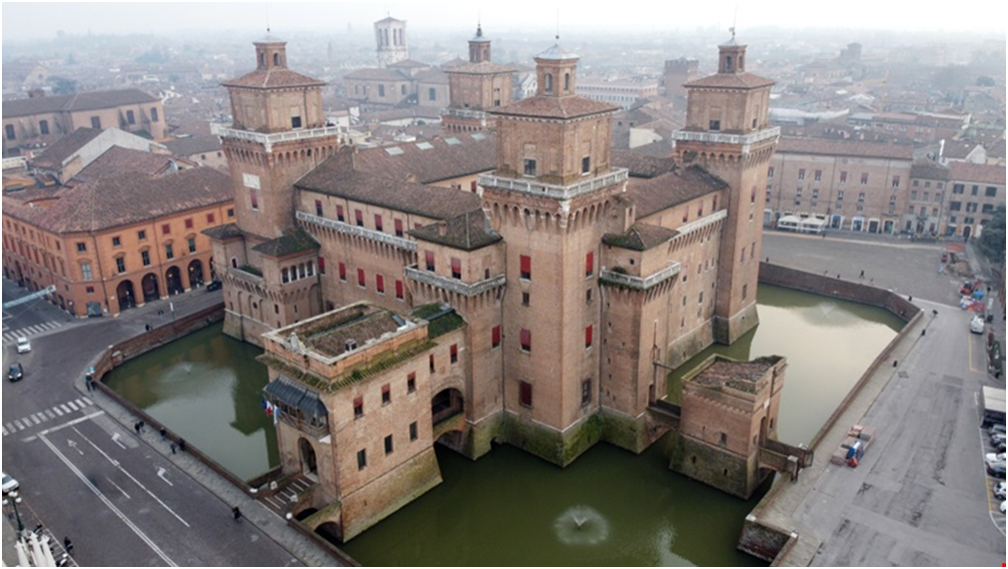
Ferrara, Italy, Este Castle
.
.