by Ida Renzicchi (Translated by the author)

MEETING WITH THE SOBRIETY AND ELEGANCE
ln the ART OF INFORMING, the unmistakable, kind and refined style of the journalist, politician and writer Jas Gawronski, whom Ida Renzicchi had the honor and pleasure of meeting in a telephone interview, should be taken as a model.
Our collaborator willingly shares with the web-users of Geapolis the experience which resulted in a conversation that reflects the inimitable class of the personage who, with great generosity, defined our column interesting.
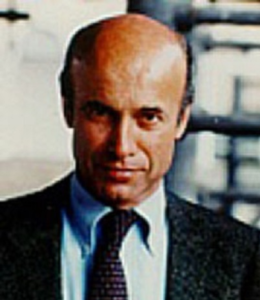
Q: Mr. Gawronski, I run the risk of appearing to you as a flatterer, but I cannot resist telling you that, in addition to your indisputable competence, what struck me very much about you, then a correspondent journalist from Moscow, was the elegance and sobriety of your style. In truth, it is difficult for me to think of anyone who has equaled it. Are you like that in your private life too?
A: In my opinion, true style belongs to people who don’t realize to have it. If one knows to have a quality and uses it, it is no longer a quality. True style belongs to those who do not realize it and, as you kindly claim that I have style, I tell you that I do not realize and it is difficult for me to answer your question.
As for my life, it seems to me that I am always the same person and that I live and behave equally in my public, journalistic or television life, as well as in my private life.
Q: Your family, of noble origins, also boasts among its ancestors the Blessed Piergiorgio Frassati, who died at the age of 24, a modern Saint Francis dedicated to the needy. How did your family experience the spirituality of this illustrious member?
A: Of all my ancestors, he is certainly the most important and, by far, the one who will remain in history. I call him Saint, because he will be proclaimed a saint, sooner or later.
An exceptional saint because, as you pointed out, he did not just go to church to pray, as do all people who believe and especially those who are close to holiness, but he spent a lot of time among the poor, helping people, making himself useful to people and this, in my opinion, is perhaps a stronger and more demanding sacrifice than going to church. This is a characteristic of him. He died very young, perhaps getting older he would have reached a more contemplative state.
He is a saint who has really helped many people.
I have a 96 years old sister named Vanda who takes care of Piergiorgio’s memory full time. You know how it happens, when one dies, he is judged better and, maybe, everyone talks about him better than when he was alive.
This is not the case with Piergiorgio. My sister, who has contacts with the whole world from Australia to the Philippines, tells me that the reactions to this figure of blessed have meant that Piergiorgio’s fame has spread all over the world and abroad even more than in Italy.
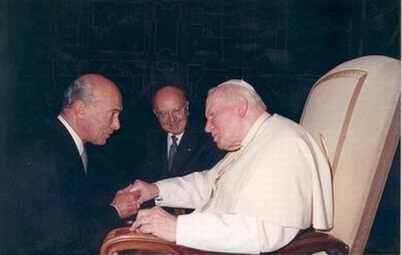
As you know, for my interviews, I have had various talks with Pope John Paul II and, every time we met, the Holy Father always came back to my uncle. It is he who proclaimed him blessed and was a great admirer of Piergiorgio.
They had similar characters, very much alike, both strong, handsome, healthy. They shared a love for the mountains, which united them.
It was John Paul II who called him “the Man of the Eight Beatitudes”, a recognition that is not usually dispensed so easily. My mother, who was his sister, lived all this very closely because, as she was only a year and a half older than him, spent her first twenty years of life with him.
Personally, I must say that, when I was little, my family talked about him a lot, and it made me almost a little tired and distanced, but I was very young, I hadn’t read anything, I didn’t understand anything.
Growing up, when I then started reading about him, I realized what a great personage he was and I forgot that slightly too sober attitude I had before towards Piergiorgio and I appreciated his great value.
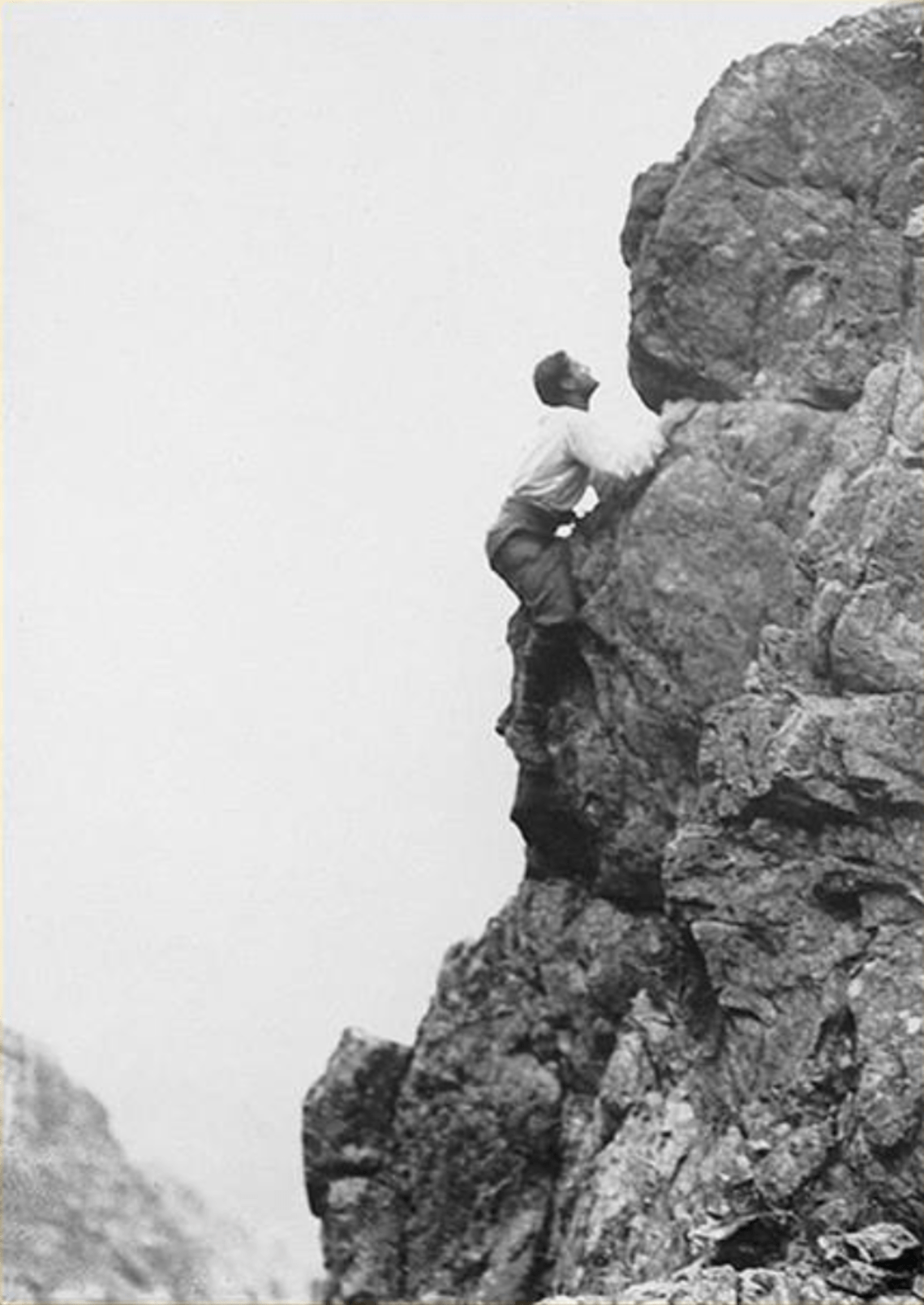
Pier Giorgio Frassati immortalized in his last climb (Wikimedia)
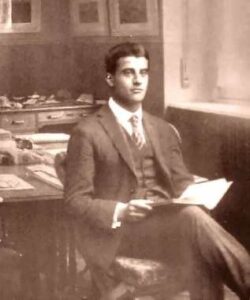
Pier Giorgio Frassati in his father’s office (Wikimedia)
Q: In your opinion, in a secularized world like that of today, is it possible to hope in youth who, following the example of your Uncle, will continue to put the evangelical teaching into practice in a Christian manner?
A: It is a very difficult time for young people who are being pulled from all sides, both by the network and by the various media.
I understand that youth today is a bit bewildered by the constant being exposed to sources of information, judgments and comments of all kinds. We really need to find an alternative to passion, to the interest they have in these new means.
I believe that it is part of a cycle, that is, now we live precisely that atmosphere that you have so well defined in your question, but I believe that, over time, this phase, this anesthetization of young people with respect to the great moral and religious problems that normally they face will undergo a change and that there will be a return to meditation and contemplation, not just information.
Q: You have had the privilege of knowing Pope John Paul II. The interview, given to you by the Supreme Pontiff and published by La Stampa of Turin, aroused worldwide interest. Who, among the many people you met, for better or for worse, has struck you most?
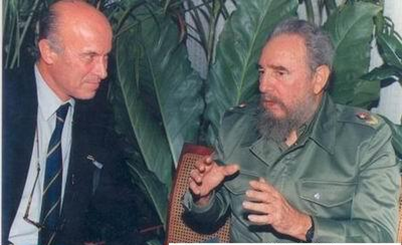
A: Just as you say, for better or for worse: this is precisely the feeling I had towards this person who combined actions of good and harmful actions. I’m talking about Fidel Castro. I have had two talks with Castro. Three hours each, so I spent six hours with him. When I wrote the article, I was accused by some of having been too tender, of not having criticized him enough. But I found a very different person from what I imagined: intelligent, curious … curious, for example, about the United States of America. The United States was Fidel Castro’s greatest rival. He lived during eleven American presidents’ government but he never said a negative word about the United States, and above all never against American people.
He naturally criticized the presidents, politics, but not the people, not the atmosphere, not the culture of the American people. Then, if we want to talk about his “evil” part, there is no doubt that Fidel Castro put people in prison for the sole reason that they did not agree with him, but I believe he did it in good faith, even if it is difficult to speak of good faith in the case of imprisoned people. Speaking with him, I can say that he acted convinced that he was doing the best for Cuba and for the Cubans. I believe that his main concern was the good of Cuba and I also think that he is the only South American dictator who has never had a bank account in Switzerland like all other American dictators. A great figure, just think that Fidel Castro, at the head of eight million inhabitants, has conditioned and made life difficult for an empire as huge as that of the United States for all the years he was in power. So, as you said, for better or for worse, he was a great personage.
Q: Nowadays, is there anyone you would like to meet or interview?
A: Yes of course, there are always people I would like to interview. I think the one I’d be most interested in meeting would be North Korea’s dictator: Kim Jong-un. For journalists, the interesting interviews are those made to a character who gives a few, for example, John Paul II gave me the only real political interview he has ever done, and he has never done others. The current Pope, on the other hand, releases them more easily. Mine is absolutely not a criticism, it is his habit. For a journalist, the excellent choice is a character who is on the one hand famous and Kim Jong-un certainly is because he is like a dagger in the heart of the United States and the Western world, so he is a character, and for all I know, I don’t think he ever gave interviews. He made a few statements but never answered spontaneous questions, therefore, Kim Jong-un is the person I would like to interview.
Q: From Benedict XVI’s Regensburg Address and the resonances generated by it, do you believe that Europe is pursuing excessive secularization? Is it correct to speak of a post-Christian Europe?
A: It seems to me absolutely so: we have all the signs, all the proofs, all the demonstrations, we talked about it a little earlier when we talked about young people. It is the fault of the accelerated rhythms of modern life for which there is no time to stop, to contemplate, to pray, to concentrate. And there is a lack of ideals, stimuli, atmospheres for which it is worthwhile to change one’s life, to be led to things of a higher level. There is no doubt that the danger of de-Christianization is already underway. There are some countries where it is more pronounced, others where it is a little less. A special case is Poland. Poland was a very Catholic country, where, at the time of Communism, when people went to church, in a church in Warsaw, absolute silence, total concentration of young people, all on their knees, even all the soldiers, almost during the entire Mass, certainly no one stood during the Consecration and the Elevation. Even there now the Church has less influence, less power and the curve is gradually decreasing. There should be a charismatic figure like John Paul II, for example, at the head of the Church, who certainly attracted many new followers to the Catholic religion.
Q: Some analysts predict an imminent “Islamization” of Europe as a consequence of the migratory flow from African and Middle Eastern countries. Is there such a risk? How to deal with this possibility?
A: The risk exists, because we have many Muslims who come to us and it is logical and understandable how by arriving in a country and settling there, they want to build their churches and spread their creed. There are two ways to slow down this process: on the one hand, unify the Catholic Church, make it more attractive, purer … all these occurred scandals disturb and diminish the power of attraction of the Catholic Church… on the other, try to limit the arrivals of these people in our country and, consequently, in Europe and for this reason acceptable living conditions should be created for them on their spot so that they are not desperately pushed to emigrate. This too is a very difficult thing to do. I have been to Libya and I visited a concentration camp, more than a camp it was just a huge big house, where there were all these blacks crammed, sweating because of the oppressive heat it was. They were there in this field that we can call prison, they came from various African countries because, from Libya, they hoped to reach Europe. I talked to some of them, I realized that, after all, desperate as they were, they preferred to face these very long and dangerous journeys, even crossing the desert. They preferred to end up in a prison in Libya rather than stay at home and starve. They were in desperate conditions and thought that in the concentration camps they might have something to eat. They needed to eat. Their problem was food rather than freedom and they faced all these difficulties, these risks, in order to come to Europe where they hoped they would find better living conditions.
Q: What, in your opinion, in the context of the European Union, could be the effective international solutions to the problem of massive immigration that we are witnessing and which appears unstoppable? What role should Italy really play in managing this criticality?
A: More than from Italy and individual countries, the phenomenon, of enormous significance, must be resolved by Europe, as you rightly suggested. I believe that we will get this too, after all I am optimistic. We need to create conditions so that these people no longer have so much desperate desire to emigrate, to come to Europe. These people don’t come to Europe because they think it’s beautiful, they come because they think they can live better. If we could create better conditions in Africa for Africans, this pressure on Europe would lessen. The problem is that precisely at the head of this movement of exploitation of Africa is China, a rather cumbersome and dangerous country in its expansionistic policy and the United States and the European Union should stem the enormous influence this nation is having over all of Africa.
Q: Was joining the European Union a right choice or not? Could Great Britain’s decision to exit the European pact, years later, represent an input for other members or will it remain an isolated case for future study? Or, as some speculate, could England possibly return again, and even relatively soon, to be part of the European Union? There was talk of Polexit after the ruling of the Polish Court of Cassation which established the supremacy of Polish laws over European ones in contrast with one of the founding principles of the European Union. In your opinion, taking into account the recent political developments within it, what will be the role of Catholic Poland in the next scenario?
A: This is more a problem of High Economy than of Politics. What I can tell you is that the European Union today is not a political union, but an economic union. For example, Poland, despite being part of the European Union, has not adopted the euro and this, for the nation, has proved to be a great economic and financial advantage. Poland itself (I often quote Poland more than other countries as I am half Polish), occasionally threatens to leave the Union, or at least, so say the Polish rulers who are very nationalist. I do not think that Poland or other countries want to leave in the next few years, I think quite the opposite, that is, that there are many nations that want to join the European Union instead. Today, the EU is a union based on the economy, on money, so if the individual states believe that, by staying in Europe, there is to be gained, they remain there, if they realized that the cost of life increases and that they would be better off out of the Union because they could earn more, it is clear that they would be tempted to leave as Britain did. Personally, I don’t think there is a chance that Britain will return, at least not anytime soon. Going back to what I said earlier, there are countries that court the idea of being able to leave Europe because they consider it their right. Europe is not a prison, it is a Union of consenting states and there are countries, we still speak of Poland, that use the threat of leaving to get something or to avoid sanctions. In the case of Poland, due to the undemocratic way in which power is managed, judges who are not in favor of the government are dismissed… in short, very sad things to tell. I do not believe that Poland will leave the EU or that in the immediate future, in the next few years, there will be any other country that wants to leave. I think the trend is rather of countries that want to join the EU. But the possibility that someone else no longer wants to be a part of it must be taken seriously, of course.
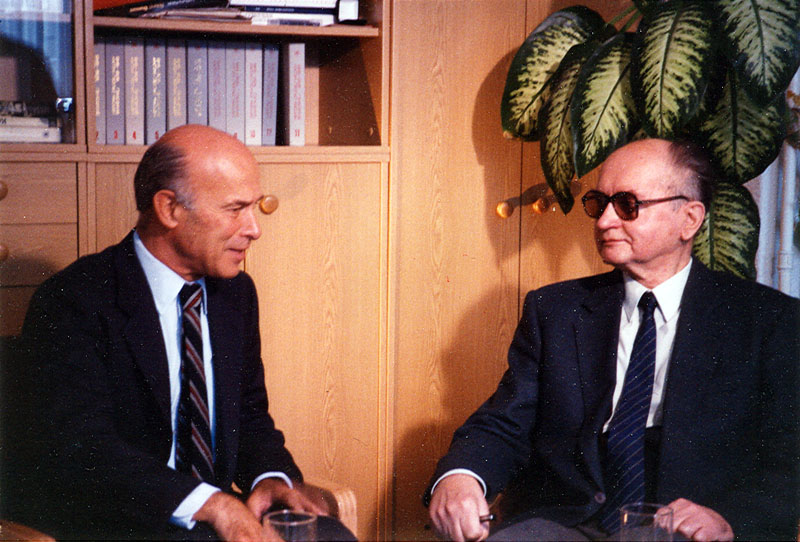
Jas Gawronski with General Wojciech Jaruzelski
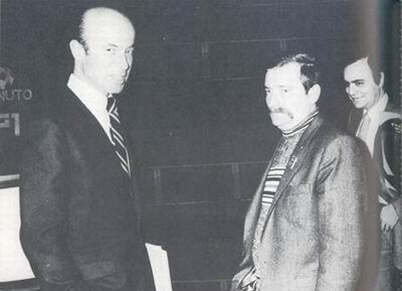
Jas Gawronski with the leader of Solidarnosc Lech Walesa (Stock Photo http://www.jasgawronski.com/foto.php)
Q: You who have followed foreign policy closely for years, what predictions would you like to make regarding the current international political/economic situation? For example, Russia/Ukraine-United States of America … (the conversation took place before the Russian/Ukrainian war.)
A: Until twenty years ago the classical world was divided by the cold war between the United States of America and the Soviet Union. Two great military powers who feared each other and therefore the danger of war was very limited. Unfortunately, in recent years, another great, very dangerous power has entered the scene: China, where, as in the communist regimes, the limitation of freedoms, freedom of movement, freedom of expression, freedom of thought has remained, and where, however, the economy is managed with the Western system, an almost free economy. Beijing looks after its own interests; this has given a huge development to China which, as we were talking about just before with regard to Africa, is the new protagonist of the world political scene and must be taken into account. The fact is that these leaders, like Putin… Putin is a dictator, of course, but he is one of the most intelligent politicians on the world stage today and so is the Chinese leader Xí Jìnpíng. They are people of the highest quality and not always in Western countries, in European countries, there are people of the same caliber in government. It is therefore necessary above all to condition and control China, because China will be the great destabilizer of world equilibrium.
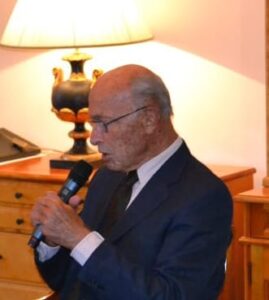
Jas Gawronski (Source: Wikimedia Commons)
Q: Among the numerous and prestigious positions, you held also that of President of the Quadrennial of Rome, a foundation for the promotion of Contemporary Art. Do you think that Italy sufficiently supports Art? What would you propose in this regard?
A: There are the Venice Biennial, the Milan Triennial, the Rome Quadrennial: state organizations that have the task of supporting art as their goal. Of course, Art today is a somewhat vague word, a little dispersive too. Art is also defined as things that many of us would not define as such. Here the sensations and personal feelings are decisive, let’s say that everyone judges on the basis of his own sensitivity. I believe that true or semi-true art or that more resembles true art, in the end is serious. Of course, if there are structures that support and help young artists to emerge, it is better, but in the end, the good ones always find their way.
Q: How to give proportionate and adequate space to the many unknown artists?
A: There are precisely these organizations, which we have just named, delegated to point out to the country the emerging skills, the artists who may deserve a better future. This is the institutional path, then if an artist applies to the Biennial and is not received, however, he is good, I think that, perhaps with greater difficulties, in the end, he will always manage to emerge, it is necessary that they are artists capable of defying the laws of the market and are able to assert themselves.
Q: From a privileged point of view, what could yours be, does there exist, among contemporary artists, the risk that, wanting to do “other”, they end up doing “nothing”? Let me explain better: Lev Nikolaevicˇ Tolstoy, in his treatise “What is Art?”, did not spare peremptory judgments and condemnations on the work of so many consecrated talents … My question is: who and according to what criteria the “experts” decide today what can be defined as a work of Art, that is, what is “Art” and what is not?
A: I believe that no one can establish what art is and what not, because I believe there are personal sensations. Everyone has their own sensitivity, especially in a field such as that of modern art. In ancient art, beauty was absolute, in modern art it is very difficult for there to be unanimity and this total recognition of art outside the great institutions that we mentioned earlier. Everything that is outside of it has no guide, no inspiration and it is difficult to say but, I repeat, that if an artist is good, in the end he emerges. Nobody can determine what art is and what not. Obviously, there is also the risk that someone may define as Art something for the sole economic purpose of increasing its price.
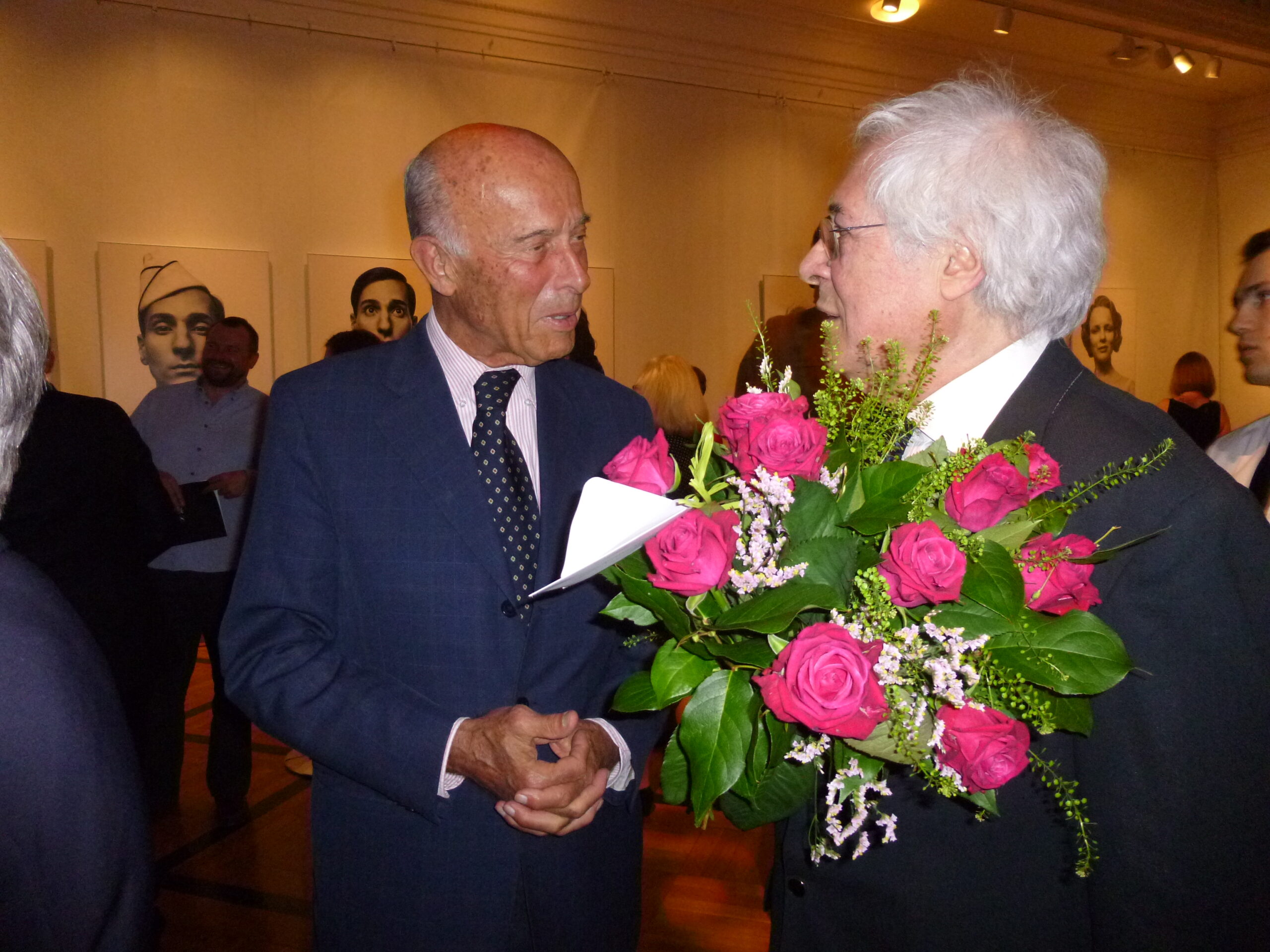
Jas Gawronski with the winner of the Oscar Award, Gianni Quaranta (on a kind concession, Gianni Quaranta Stock Photo)
Q: You made a cultured television and dealt with scientific dissemination. What do you think of the current Italian television production, which increasingly focuses on entertainment based on reality TV, talk shows, many of which based on gossip, reserving less and less space and night hours for cultural programs? “Panem et circensens”? In your opinion, can we apply Giovenale’s Latin phrase to the choice of television schedules to speak of a certain demagogy that would distract the mass from the unsolved problems of the country? Doesn’t it seem to you that, instead of moving forward, they are taking steps backwards? Why, especially on the part of the public service, do we not ignore the audience ratings and do not consider the people sufficiently mature for broadcasts that contribute to increasing their knowledge and consequently their culture?
A: I find that, as you say, there is a lot of vulgarity. I believe that the fault lies not so much with those who produce or broadcast programs but with the audience who obviously prefer this type of broadcasting to other more cultural ones.
We are in a free market and what influences the choices are people’s preferences. The fault lies with the beholder. It is the people who love these things. Over time, tastes will also change. I have seen in America, even there there is great vulgarity but then there is always an alternative, another type of broadcast. In any case, we must always let the people choose.
Q: Geapolis, the cultural association with which I collaborate, is a web community that promotes and supports the culture of adult education and lifelong learning, trying to foster and implement processes of social innovation in situations and contexts at risk of educational and cultural poverty (I’ve literally copied the declaration of intentions on the Association’s website). With the support of technology, the Geapolis web community intends to spread digital culture throughout the territory. What future developments do you, journalist, politician and writer foresee for the press? Will the new generations continue to buy and read books and newspapers or, thanks to the network, are we dangerously entering a mere and arrogant instant and notional use of the contents?
A: I hope not. Certainly the newspapers will publish fewer and fewer copies. They are destined to end, unfortunately, and with them the pleasure of reading a newspaper, holding it in your hand, hearing the noise of the rustle of its paper… an incomparable pleasure. I believe this is the future. Perhaps the ones that will withstand the brunt of this trend better, those that will resist more than the others, will be the local newspapers, the provincial newspapers, not those that give the big political-economic news but those that talk about small local news, about potato fields, harvest, they will be the ones that will hold up the most. The big newspapers, after all the figures already show it today, are destined to run out, there will be fewer and fewer of them. For books, perhaps it will be a bit slower process, at least I hope. It strikes me to see these huge bookstores and few people buying. However, I believe that giving up books is a little more difficult.
Q: How do you spend your free time? What do you like to do? Your projects?
A: My brother, as a boy, taught me to follow the music on the scores, so when I can, when I have time and when I feel like it, I listen to classical and jazz music by reading the notes on the scores. Music is understood much more by seeing it written as well as listening to it. And then, I also take walks, first of all for my pleasure, and secondly because it is also good for health.
I thank Jas Gawronski for the exclusive and precious opportunity he granted to me and I take the chance to wish him the very best.
Ida Renzicchi
Rome, January 26, 2022