ELEONORA DUSE, “The Divine”

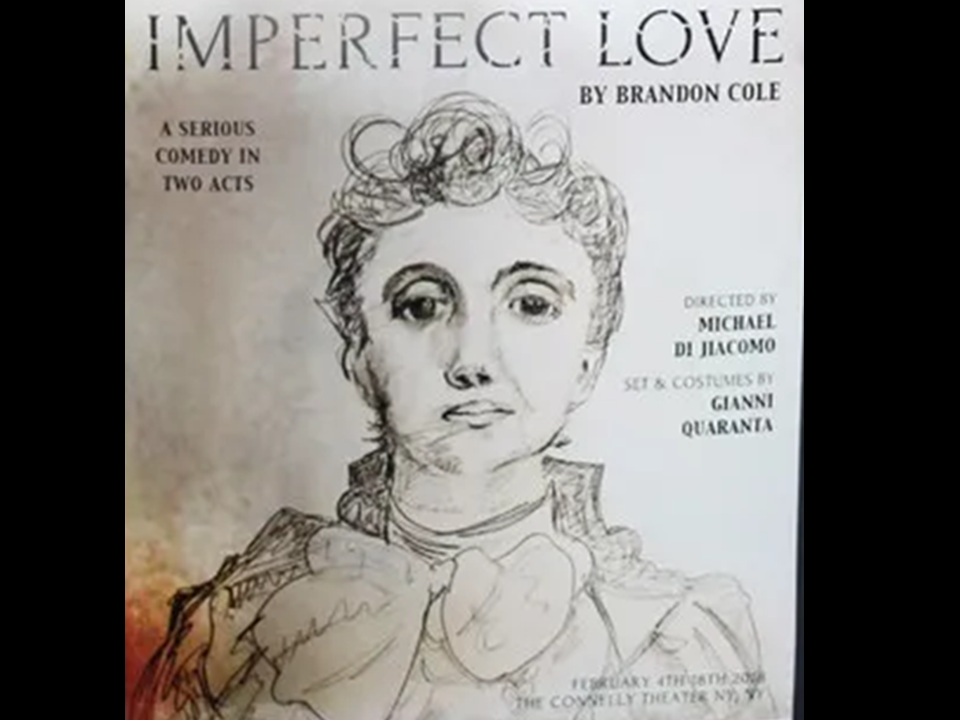
Not long ago, the scenographer Gianni Quaranta entrusted me to translate from American to Italian language, a Brandon Cole’s drama that, a short time after, was successfully represented at the Connelly Theatre in New York.

I was agreeably surprised that an American author had written and wanted to stage a drama located at the Teatro Argentina in Rome, regarding two characters who marked the history of the theatre she, and of the literature he… further proof of the great esteem enjoyed by Italian Art and Culture all over the world.


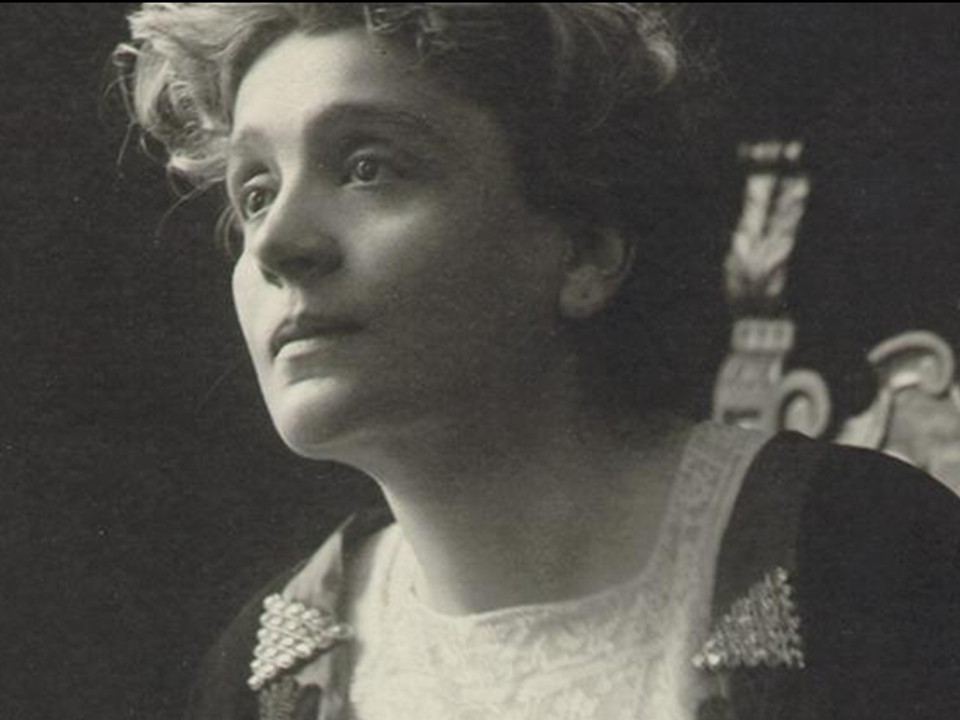
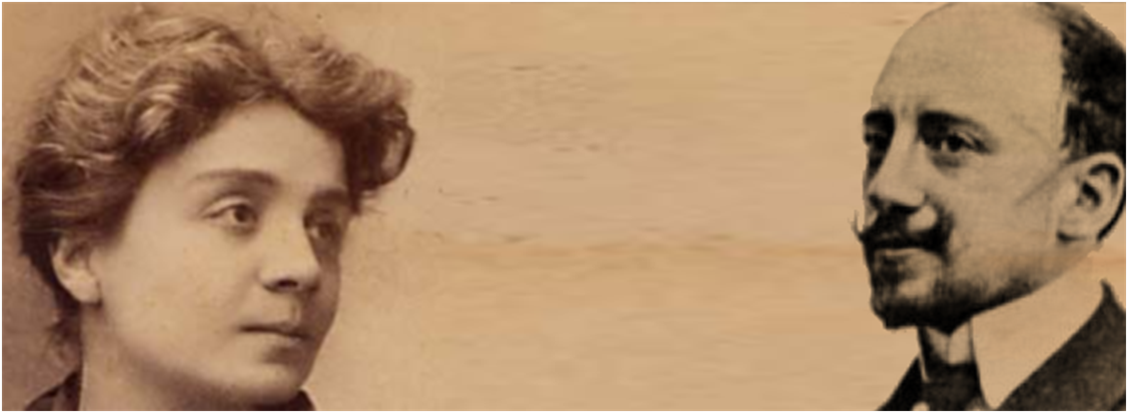
Eleonora Duse (1858-1924), the theatrical actress defined by Hermann Anastas Bahr “the greatest actress of the world”, she, the protagonist and symbol of the “modern theatre”, who was called “The Divine”, before by D’Annunzio, then by all the audience, and “The Poet”, “The Highly Imaginative”, appellations with which was called the Italian writer, poet, playwright, politician, journalist, soldier and patriot Gabriele D’Annunzio (1863-1938).
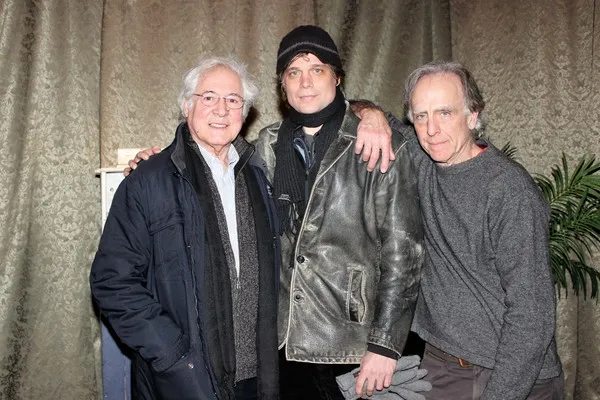
Brandon Cole,  with  the film director Michael Di Jiacomo and the scenographer Gianni Quaranta at the Connelly Theater Connelly Theater-New York)

The two who met for the first time in Rome in 1882, later had a long love story lasted for about nine years, a love affair born after a dedication by the writer on a copy of his Roman Elegies “To the Divine Eleonora Duse”, which aroused in the actress the desire and the curiosity to meet the author.

The relationship with the already very famous actress brought immediate attention to the writer. In fact, Eleonora Duse, by bringing his works to the stage, contributed, in a decisive way, to the fame of D’Annunzio and, even personally financing the productions of his plays, she obtained critical success for the playwright both in Italy and abroad.

Daughter of actors, raised for most of her life as a nomad and left a mother orphan when she was still very young, Duse was convinced, by these and other experiences, of the need for the actor to be an anonymous medium sacrificed to Art. In contrast to the heavy make-up of the period, which made the actor's face a mask, she showed herself as she was: modern and nonconformist she did not wear makeup either on stage or in everyday life. Considered by some people to be ``ugly`` because the marked features of her face did not respect the classic aesthetic canons of that time actresses, she, on the contrary, was adored by both critics and the public precisely because of her different beauty.

But the great Duse who sold out in theaters all over the world, despite her skill, could not achieve the same result when she persisted in reciting her lover’s comedies and dramas. However, she, actress, producer and manager of her own company, made sure the writer to remain unaware of the meager income deriving from his works, paying him the royalties each time as if the theaters staging his works were always been full of paying audiences even when they weren’t.

And yet, despite Duse’s love and dedication to him, the playwright had no qualms about being unfaithful to her both in their relationship as a couple and in the professional sphere, proposing his works to emerging and younger actresses. In fact, for the first French performance of La Ville Morte, he preferred the Parisian Sarah Bernhardt, sparking an artistic dispute between the two women.

To distance Duse from Bernhardt who had dared to define her rival, “a great actress but not a great artist”, even intervened George Bernard Shaw who, in 1895, with a very strong critical assessment, did justice to the artistic value of Duse: “It must be said that in the art of being beautiful Bernhardt is a poor innocent compared to Duse … When one considers that mostly tragic interpreters excel only in the outbursts of those passions that are common to men and beasts, it will not be difficult to understand the unquestionable primacy of Duse’s art, which underlies a purely human idea in every little bit of it “.

Eleonora Duse, in the 1890s, brought to the Italian stages the dramas “Doll’s House” and “The Woman of the Sea” both by the Norwegian poet and theater director, Henrik Ibsen, considered one of the fathers of modern dramaturgy.

“The Divine” was a revolutionary, completely breaking the mould of the nineteenth-century theater and introducing an instinctive and natural method, with a strong emotional and visual impact.

In all her interpretations she gave a natural and plastic imprint to her acting never before seen on stage, refusing any form of visual alteration that could in any way modify her presence.

Daughter of actors, raised for most of her life as a nomad and left a mother orphan when she was still very young, Duse was convinced, by these and other experiences, of the need for the actor to be an anonymous medium sacrificed to Art.

On stage her facial expressions and gestures were so eloquent that, despite her acting only in Italian, when she performed abroad, the audience could understand her even without understanding the Italian language.

“Her acting, even that of her hands, was fabulously fine and enthralling; her voice was capable of every nuance, managing to be touchingly childish or to freeze the blood in the veins ”(Herman Hesse).

In contrast to the heavy make-up of the period, which made the actor’s face a mask, she showed herself as she was: modern and nonconformist she did not wear makeup either on stage or in everyday life.

Considered by some people to be “ugly” because the marked features of her face did not respect the classic aesthetic canons of that time actresses, she, on the contrary, was adored by both critics and the public precisely because of  her different beauty.

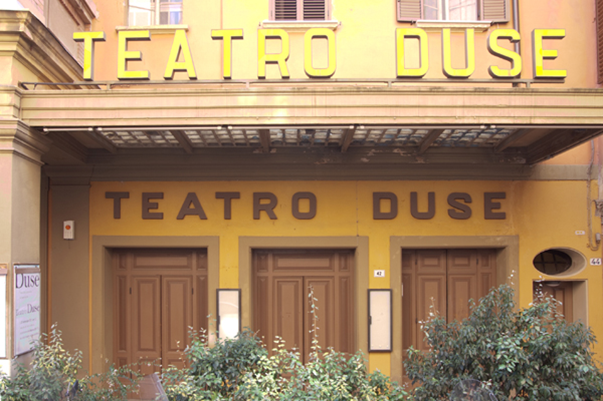
In 1898, to pay homage to the great actress, despite not only she was still alive but still took the stage, the Brunetti Theater in Bologna changed its name becoming Teatro Duse: a rare appreciation seldom given to a still performing actor.

Speaking of Duse, we cannot overshadow the fact that, proving to be an avant-garde person also in her social action on women’s side, the great artist was what, today, many people would call a feminist.

Bologna, Theatre Duse

“The fact is that while everyone is wary of women, I get along very well with them! I don't care if they lied, if they betrayed, if they sinned - or if they were born perverse - because I feel that they cried, - they suffered to feel or to betray or to love ... I put myself with them and for them and I search them, I search not out of mania for suffering, but because my feminine lamentation is larger and more detailed, it is sweeter and more complete than the lamentation that men grant me. `` (Eleonora Duse).

The artist, with generosity and trust in the female gender, showed her concern for her fellow actresses opening in Rome a shelter and a library where they could rest, read, study without being disturbed or bothered. Unfortunately, due to the low turnout of guests, afterwards, the house and the  library closed their doors.

After their separation D’Annunzio, who survived her fourteen years, realized the grievous loss and how much he had been loved and spent the rest of his life tearing himself apart in the memory of Eleonora. At the news of her death, it seems that the great poet, now old, murmured: “She, the one I did not deserve, is dead. No woman has ever loved me like Eleonora, neither before nor after. This is the truth torn by remorse and softened by regret. “

With Duse, the Art of Acting reached very high artistic levels entering what is now called “modern theater”.

“I have just now seen the Italian actress Duse in Cleopatra by Shakespeare. I don't know Italian, but she acted so well that I seemed to understand every word; what a wonderful actress!`` (Anton Pavlovič Chekhov - Russian playwright)

IMPERFECT LOVE  

“Imperfect Love” is a precious diamond with which Brandon Cole honors Eleonora Duse and the theater…. His journey by him has produced a drama of depth, psychological insight, and style; a story of love and betrayal where life and theater merge   (read more click here)

Remote conversation with Brandon Cole. Thanks to technology, Ida Renzicchi has met, on behalf of Geapolis, the American writer and screenwriter, Brandon Cole, author of the play. (read more click here)